About
The Meru Combinatorics Conference is a yearly event held in India, dedicated to the broad field of combinatorics. The conference features two in-depth minicourses delivered by leading experts, along with contributed talks and poster presentations.
More information on past Meru Conferences can be found here:
Meru Combinatorics Conference
Meru stands for the mountain in Indian mythology and was used as a metaphor for the triangle of binomial coefficients studied by classical Indian prosodists.
Conference Schedule
| Time | Day 1 (June 1) |
Day 2 (June 2) |
Day 3 (June 3) |
|---|---|---|---|
| 08:00 – 09:00 | Registration | ||
| 09:00 – 09:30 | Welcome & Opening Remarks |
||
| 09:30 – 11:00 |
Minicourse I - Part 1Sasmita Barik |
Minicourse I - Part 2Sasmita Barik |
Minicourse I - Part 3Sasmita Barik |
| Tea / Coffee Break | |||
| 11:15 – 12:45 |
Contributed Talk - Session 1Neha GoregaokarSamir Shukla Dharm Veer |
Contributed Talk - Session 2Brahadeesh SankarnarayananRavindra Pawar Amitayu Banerjee |
Contributed Talk - Session 4Digjoy PaulShushma Rani Manika Gupta |
| Lunch Break | |||
| 14:00 – 15:30 |
Minicourse II - Part 1Priyavrat Deshpande |
Minicourse II - Part 2Priyavrat Deshpande |
Minicourse II - Part 3Priyavrat Deshpande |
| Tea/Coffee Break | |||
| 16:00 – 17:30 |
POSTER SESSION |
Contributed Talk - Session 3Nayana Shibu DeepthiTirtharaj Basu Arundhati Rakshit |
Contributed Talk - Session 5S SelvarajaShuchita Goyal Rutuja Vilas Sawant |
| 17:30 – 17:45 | Day 1 Ends | Day 2 Ends | Valedictory Function |
Speakers
To access the e-booklet of the conference, please click here .
Minicourse Speakers
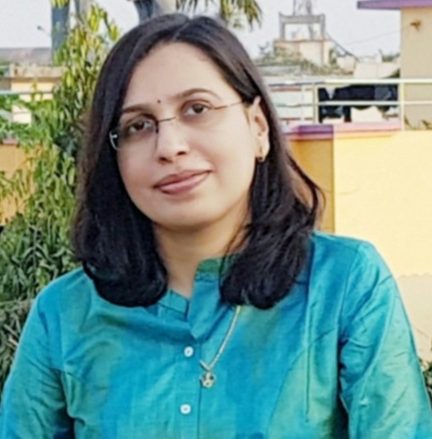
IIT Bhubaneswar
Integer matrices with integer eigenvalues and Laplacian integral graphs
If all entries of a matrix \(A\) are integers, we call \(A\) an integer matrix. The study of such matrices lies at the intersection of linear algebra, number theory, and group theory. A particularly significant and challenging problem in this context is the characterization of integer matrices whose eigenvalues are themselves integers.
In 2009, Martin and Wong demonstrated that almost all integer matrices have no integer eigenvalues; more precisely, for any \(n \geq 2\), the probability that a random \(n\times n\) integer matrix has at least one integer eigenvalue is 0. This result naturally motivates the following questions: Under what conditions does an integer matrix have all its eigenvalues as integers? Furthermore, is there a systematic method for constructing such matrices? An important source of examples arises from graph theory. A graph is said to be Laplacian integral if the spectrum of its Laplacian matrix consists entirely of integers. Thus, the Laplacian matrices of Laplacian integral graphs form a notable class of integer matrices with integer eigenvalues.
The present lecture series will focus on recent developments concerning the characterization and construction of integer matrices whose eigenvalues are all integers. The series is organized into three lectures:
- Characterization and construction of integer matrices with integer eigenvalues: Foundational results, necessary and sufficient conditions, and explicit methods for constructing integer matrices with integer eigenvalues.
- Spectral integral variation and constructably Laplacian integral graphs: Spectral properties of Laplacian integral graphs and constructive approaches for generating new families of such graphs.
- Graphs with distinct integer Laplacian eigenvalues: The identification and characterization of graphs whose Laplacian eigenvalues are distinct integers, highlighting recent advances and open problems in the area.
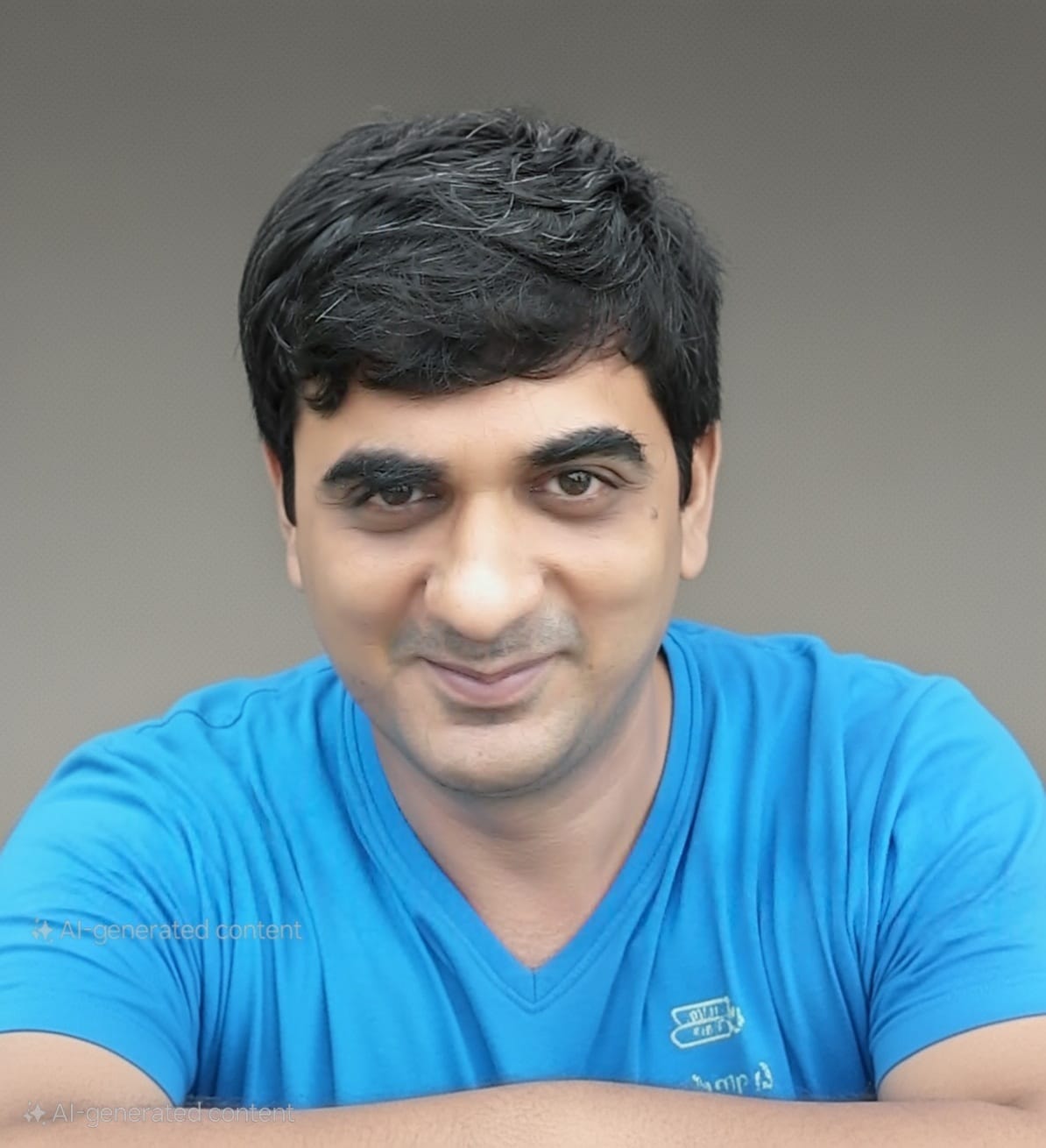
Chennai Mathematical Institute
Hyperplane arrangements: at the crossroads of combinatorics, topology, and algebra
Hyperplane arrangements have long been a fascinating and rich area of study in mathematics, bridging combinatorics, geometry, topology, and algebra. Originating in the 19th century from classical geometry and linear algebra problems, the field has since evolved into a deep and vibrant subject in its own right. In the late 20th century, pioneering contributions by mathematicians such as Thomas Zaslavsky and Richard Stanley uncovered profound combinatorial structures, initially motivated by enumerative questions like counting regions and computing characteristic polynomials of arrangements. These investigations revealed surprising connections to algebraic geometry and singularity theory. At the same time, foundational work by Vladimir Arnold and Pierre Deligne on configuration spaces and generalized braid groups expanded the subject’s scope, interweaving topology, combinatorics, group theory, and representation theory. Today, hyperplane arrangements serve as a unifying framework, with applications ranging from the topology of complexified complements to algebraic notions such as freeness and logarithmic derivations.
In this lecture series, I will survey several important milestones in the theory of hyperplane arrangements, with a particular focus on combinatorial techniques and problems that are unique to this area of mathematics. The goal is to provide participants with both historical perspective and modern tools to engage with current research in this exciting domain.
In particular, the detailed plan of three lectures is:
- Enumerative aspects — Counting regions, Zaslavsky’s theorem, bijective techniques, and connections to deformations of reflection arrangements.
- Topological Insights — The topology of complexified complements, configuration spaces, Artin groups, Orlik-Solomon algebras and the NBC (no broken circuit) bases.
- Algebraic Structures — Matroids and arrangements. The concept of freeness, logarithmic derivations, and their algebraic implications.
Contributed Talks
Total Distinguishing Colorings in Cayley Graphs and Group Actions
The Number of Pfaffian Orientations on Polygonally Cellulated Surfaces
Tight Bounds on the Carathéodory and Exchange Numbers for Δ-Convexity Spaces
Complements and Complementary Homologies
Two-Color Johnson Graphs from Exterior Powers
Generators and Relations for Kostant-Kumar Modules and Applications to Schur Positivity
Combinatorial Identities and Enumeration in Uprooted Trees
Interpreting the (signed) Chromatic Polynomial Coefficients via Hyperplane Arrangements
Matching Minors: a Sequel to the Results of Lovász and Plummer
Generalizing Fröberg's Theorem: A Combinatorial Approach
Cohen-Macaulayness of Squarefree Powers of Edge Ideals of Whisker Graphs
Vietoris-Rips Complexes of Integer Lattices
Bousfield Localisation on Posets
Marked Multi-Colorings and Marked Chromatic Polynomials of Hypergraphs and Subspace Arrangements
A Plethystic Formula for the Super Restriction Coefficients.
Posters
Poster Presentation Instructions:
Participants presenting posters are requested to follow the guidelines below to ensure a smooth and consistent display.- Poster Dimensions: A0 size (approximately 33.1 inches in width and 46.8 inches in height)
- Layout: Portrait (vertical) format is required
- Display Board Size: Available boards measure 35 inches in width and 45 inches in height
Please ensure that your poster fits comfortably within the provided display area. Posters exceeding these dimensions or prepared in landscape format may not be accommodated.
We look forward to your presentations and engaging discussions during the poster sessions.
Towards Characterization of Cubic Cycle-Extendable Graphs
An Effective Algorithm for 3-Manifold Fundamental Groups and its Application to Detecting 4-Manifold Crystallizations
Componentwise Linearity of Symbolic Powers in Chessboard Complexes
Simplicial Degree \( d \)-Maps on \( n \)-Spheres
On Hamiltonicity and Perfect Codes in Non-Cyclic Graphs of Finite Groups
On Embeddings of the Difference Graph Of The Intersection power Graph And the Power Graph
Admissible Matchings and the Castelnuovo-Mumford Regularity of Ssquare-Free Powers
The Difference Subgroup Graph of a Finite Group
Normal \( 4 \)-Pseudomanifolds with a Relative 2-Skeleton
Metric Dimension of Difference Graph of Finite Groups
Negative Correlation for the Arboreal Gas and q < 1 Random Cluster Model
Vertex Connectivity of Weakly Zero Divisor of Commutative Rings
Off-Diagonally Symmetric Alternating Sign Matrices
On Finite Groups Whose Order Supergraphs Satisfy a Connectivity Condition
New Insights into Laplacian Spectra of Token Graphs
Laplacian Eigenvalue Distribution in Unicyclic Graphs
Total 2-cut Complexes of Powers of Cycle Graphs and Cartesian Products of Certain Graphs
On Connectivity of the Clean Graphs of Commutative Rings
A Combinatorial Hopf-Trace Formula and its Applications to Combinatorial Borsuk-Ulam Type Theorems
The Full P-Vertex Problem and Perfect Matchings for Bipartite Graphs
Betti Numbers and Singular Homology Groups of q-Matroids
\( \theta \)-Free Graphs: Characterization and Consequences
Solitude Versus b-Invariance
On the Symmetric Normaliser Graph of a Group
Polynomial-time Recognition of Word-Representable WPC Graphs
Off-diagonal Rado number for \( x + y + c = z \) and \( x + qy = z \)
Organizing Committee
Organizing Committee
Convener:
Dr. Anurag Singh, IIT Bhilai
Co-conveners:
Prof. Arvind Ayyer, IISc
Prof. Amritanshu Prasad, IMSc
Chief Patron
Prof. Rajiv Prakash
Director, IIT Bhilai
Local Organizing Committee
Dr. Anurag Singh, IIT Bhilai
Dr. Lakshmi Kanta Patra, IIT Bhilai
Dr. Rishi Ranjan Singh, IIT Bhilai
Scientific Advisory Committee
Prof. Arvind Ayyer, IISc
Prof. N. Narayanan, IIT Madras
Prof. Amritanshu Prasad, IMSc
Prof. S. Sivaramakrishnan, IIT Bombay
Event Support Team
Shrajal Bajpai
Anamitro Biswas
Himanshu Chandrakar
Aparna Gupta
Swetali Mahapatra
Kirtidev Mohapatra
Miku Naik
Sonu Nigam Naik
Dipak Patra
P. Vignesh
S Devika
Subhashree Sahoo
Tapaswini Sahu
Important Dates
Registration (with or without abstract submission) deadline : 15th February
2026
Registration (without abstract submission) deadline : 1st March 2026
Notification of acceptance: 15th March 2026
Last date for payment of registartion fees: 5th April 2026
Conference Dates: 1st to 3rd June 2026
Registration & Abstract Submission
! REGISTRATION CLOSED !
- Regular: INR 5000
- Students and Postdoctoral Researchers: INR 2000
Registration Fee Details
The payment link, along with detailed payment instructions, has been shared with the selected participants via email.
Confirmed Participants
Abhimanyoo Karve, IIT Madras
Ajay P Joseph, NIT Karnataka
Amitayu Banerjee, Eotvos Lorand University, Budapest, Hungary
Amritanshu Prasad, The Institute of Mathematical Sciences, Chennai
Anchal Sharma, Indian Institute of Technology Mandi
Anjali Maurya, IIT Madras
Anshu, Indian Institute of Technology Delhi
Arka Ghosh, Indian Institute of Technology Bhubaneswar
Arundhati Rakshit, TCG CREST
Arvind Ayyer, IISc
Aswathy R Varma, BITS PILANI
Ayushi Trivedi, IIT Delhi
Brahadeesh Sankarnarayanan, Indian Institute of Technology Jodhpur
Chauhan Raj Vinodbhai, Ahmedabad University
Daksh Sultania, IISc Bangalore
Dharm Veer, Dalhousie University, Halifax, Canada
Dibyendu Biswas, IIT Kanpur
Digjoy Paul, SRM AP
Parveen, IIT Guwahati
Ekta Sangwan, Birla Institute of Technology and Science
G. Arunkumar, Indian Institute of Technology Madras
Gargi Lather, Chennai Mathematical Institute
Gaurav Bhatnagar, RamanujanExplained.org
Harikrishnan T R, IMSc, Chennai
Hiranya Kishore Dey, IIT Jammu
Kanoy Kumar Das, Chennai Mathematical Institute
Koustav Mallik, Indian Statistical Institute, Kolkata
Labani Sarkar, Presidency University Kolkata
Mangaldeep Saha, Indian Institute of Technology, Delhi
Manika Gupta, Institute of Mathematical Sciences, Chennai
Manisha, Birla Institute of Science and Technology, Pilani Campus, Pilani
Manjil Saikia, Ahmedabad University
Mohan Ravichandran, Idanta.ai
Mohd Shariq, BITS PILANI
Mukund Balanarayan, IISER Kolkata
Navnath Daundkar, IIT Madras
Narayanan N, IIT Madras
Nayana Shibu Deepthi, IISER Mohali
Neha Goregaokar, Brandeis University
Niranjan Balachandran, IIT Bombay
Nishad Kothari, IIT Madras
Nishu Kumari, University of Vienna
Om Joglekar, IIT Bombay
Om Prakash, IIITDM KANCHEEPURAM
Om Prakash, Chennai Mathematical Institute
Omkar Ramdas, IIT Bombay
PAPI RAY, IISER MOHALI
Piyush Verma, IIT Bhubaneswar
Pragati Asutosh Jena, IIT Bhubaneswar
Pratiksha Chauhan, Indian Institute of Technology Mandi
Praveen Mathil, National Institute of Science Education and Research Bhubaneswar
Pritam Chandra Pramanik, TCG CREST
Puja Samanta, IIT Madras
R. Ganeshbabu, IIT Madras
Rahul K P, IIT Madras
Rahul Kumar, BITS Pilani, Pilani Campus
Rakhi Pratihar, IRMAR, University of Rennes, France
Ravindra Pawar, IIT Madras
Rutuja Vilas Sawant, Chennai Mathematical Institute
S Selvaraja, Indian Institute of Technology Bhubaneswar
S V Bharanedhar, Central University of Tamil Nadu, Thiruvarur
Saikat Maity, Ahmedabad University
Samir Shukla, IIT Mandi
Santhosh Raghul, IIT Madras
Saraswati Girish Nanoti, Indian Institute of Science
Sauvik Poddar, Presidency University Kolkata
Shalu Kumari, IIT MADRAS
Shubhanshu Prasad, IISc Bangalore
Shuchita Goyal, BITS Pilani
Shushma Rani, IIT Ropar
Sreejith K P, IIT Madras
Subhash, IISER Tirupati
Subhashish Kumar Shukla, Ahmedabad University
Sucharita Biswas, IIT Bombay
Sudip Bera, Dhirubhai Ambani University
Surbhi Tanwar, Dr B R Ambedkar University Delhi
T. Kavaskar, Central University of Tamil Nadu
Tirtharaj Basu, The Institute of Mathematical Sciences
Tithi Dwary, IIT Guwahati
Umesh Shankar, IISc Bangalore
Vishnu Kumar, IIT Jodhpur
Yash Bakshi, Indian Institute of Science, Bangalore
Yash Chawda, IIT Jodhpur
Sponsors




Venue
Location:
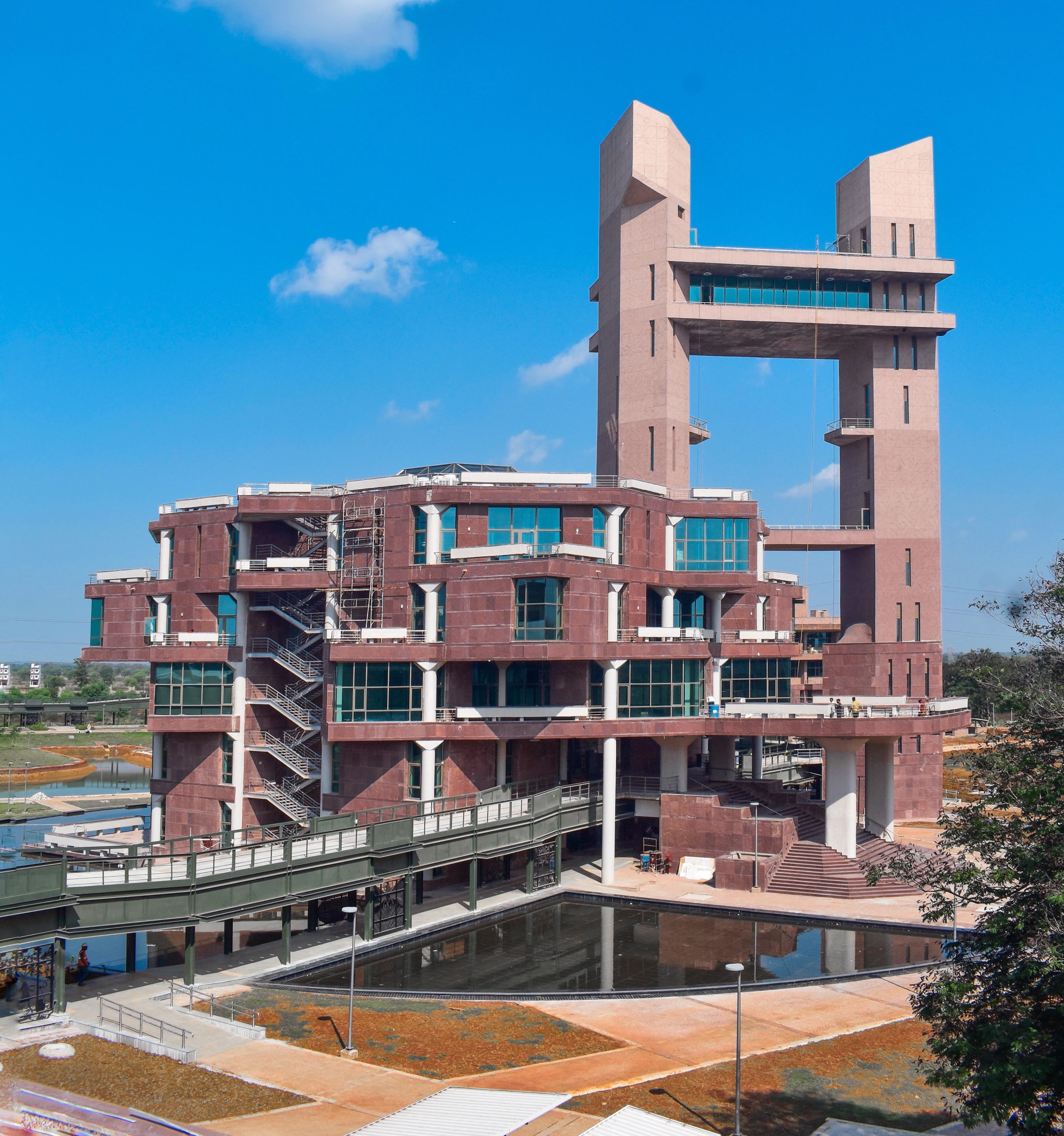
IIT BHILAI
Kutelabhata, Durg, Chhattisgarh, 491002, India
Accommodation: TBA
How to reach
By air
The nearest airport is Swami Vivekananda International Airport in Raipur, about 55 km away. The best option for commuting is by car, that takes 1 to 2 hours depending on the time of the day. A one-way car ride costs roughly Rs 1000-1500, and an additional parking charge of Rs. 60 while leaving the airport. The airport is connected by flight to all major metro cities of India, with particularly more flights to and from Delhi, Mumbai and Kolkata.
By railways
The nearest railway station is Durg. It takes about Rs. 200 for reserving an auto-rickshaw to the station from the IIT, and Rs. 500 by car. Raipur junction (38 kilometers away) has a greater number of options for train routes, and takes less than 1 hour from Durg by local train which are available throughout the day at certain intervals. Raipur lies on the main route between Mumbai and Kolkata; and daily direct trains connecting Delhi, Kolkata, Chennai and Mumbai are available. Direct trains to many cities like Ahmedabad, Allahabad,Varanasi, Bangalore, Cochin, Pune and Hyderabad are also available.
By road
Bhilai is connected by roadways to many major towns. A journey to Hyderabad takes approximately 13-15 hours, with fares starting around Rs. 900-Rs. 1000 by bus. Pune is 18-20 hours away, with fares around Rs. 1200-Rs. 1400. Nagpur takes roughly 6-7 hours, with fares starting at Rs. 400 and Indore 14-16 hours, and ticket prices start at Rs. 1050. Buses to Sambalpur take roughly 5-6 hours. Buses are available both from Bhilai and more frequently from the Inter-State Bus Terminal in Raipur, approximately 40 km away.
Contact
For any queries, write to us at: meru@iitbhilai.ac.in